
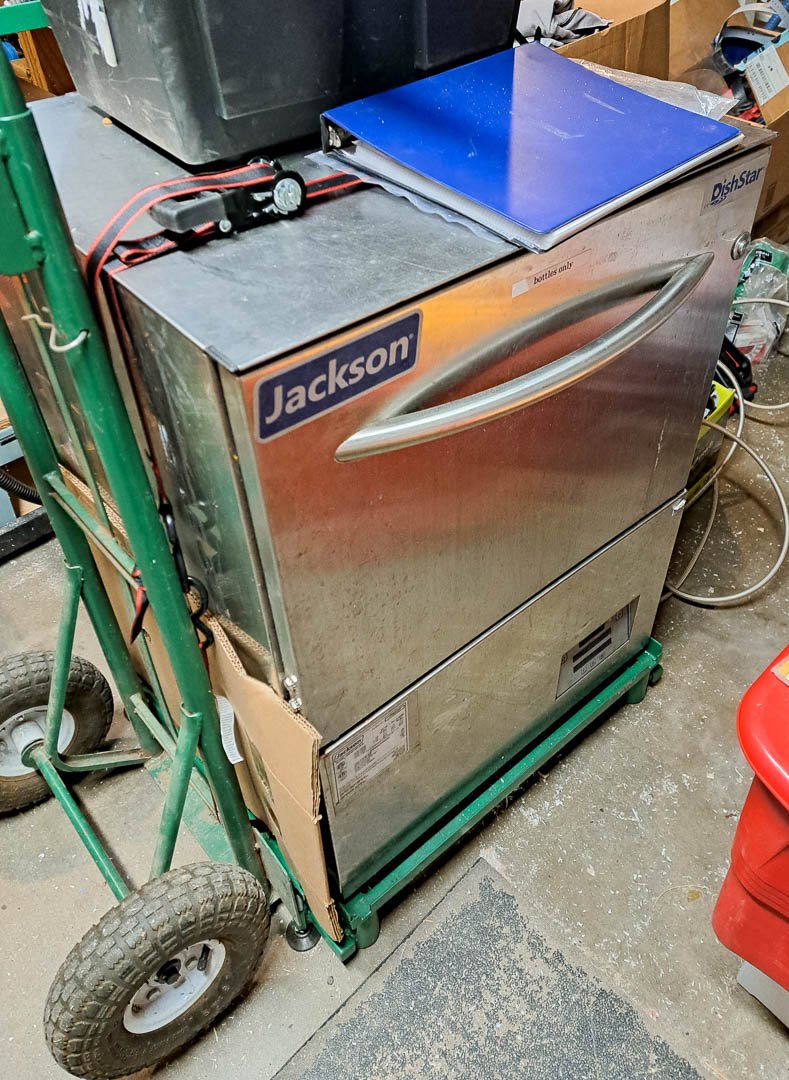
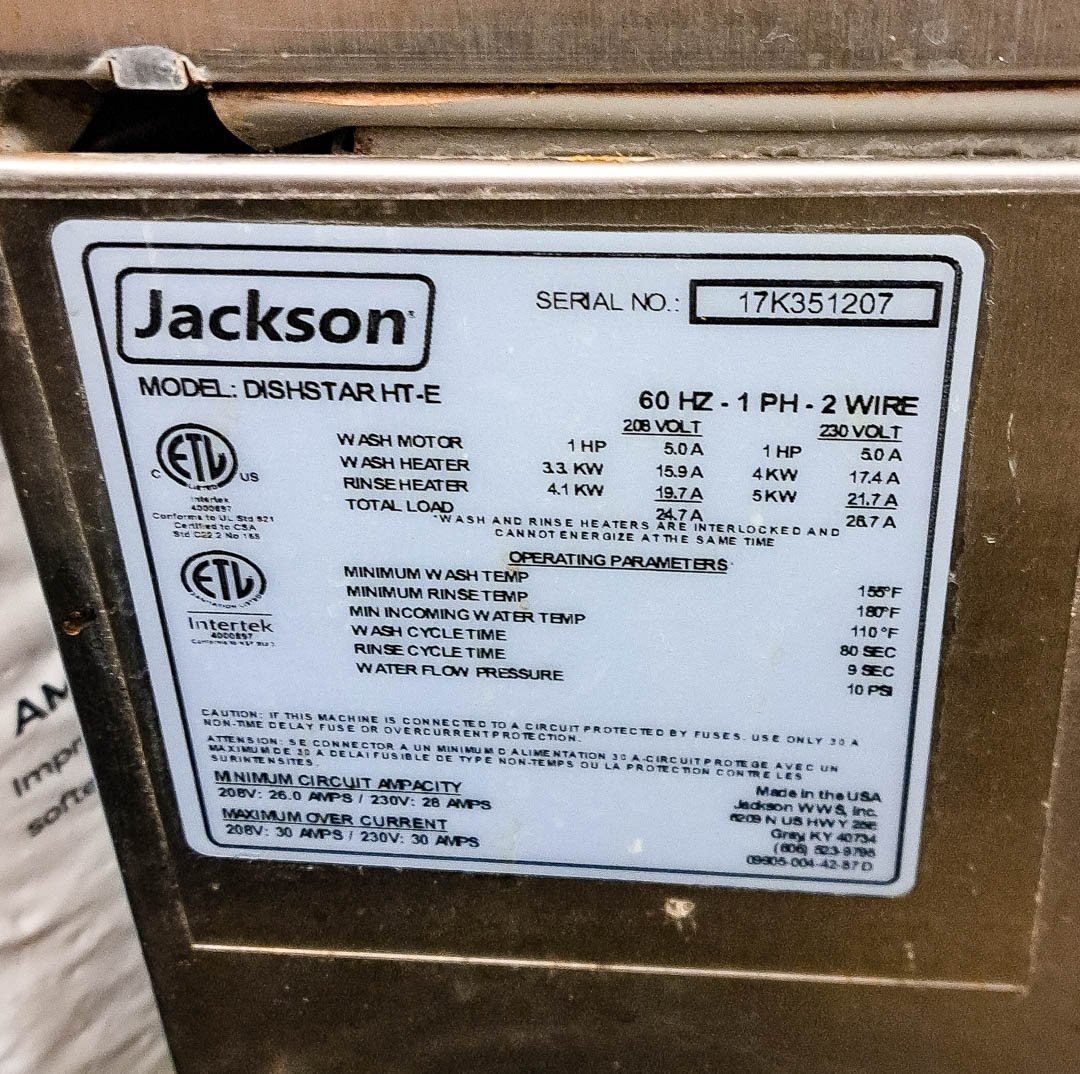
Jackson DishStar HT-E model modified for portable use
This is a commercial dishwasher that can take a single rack or stack of racks up to about 14" high. It uses less than a gallon of water per cycle to wash and rinse/sanitize. When a cycle is done - about 90 seconds - racks are unloaded and another set inserted to cycle again. There is no cooling time and racks come out steaming hot.
Racks on hand
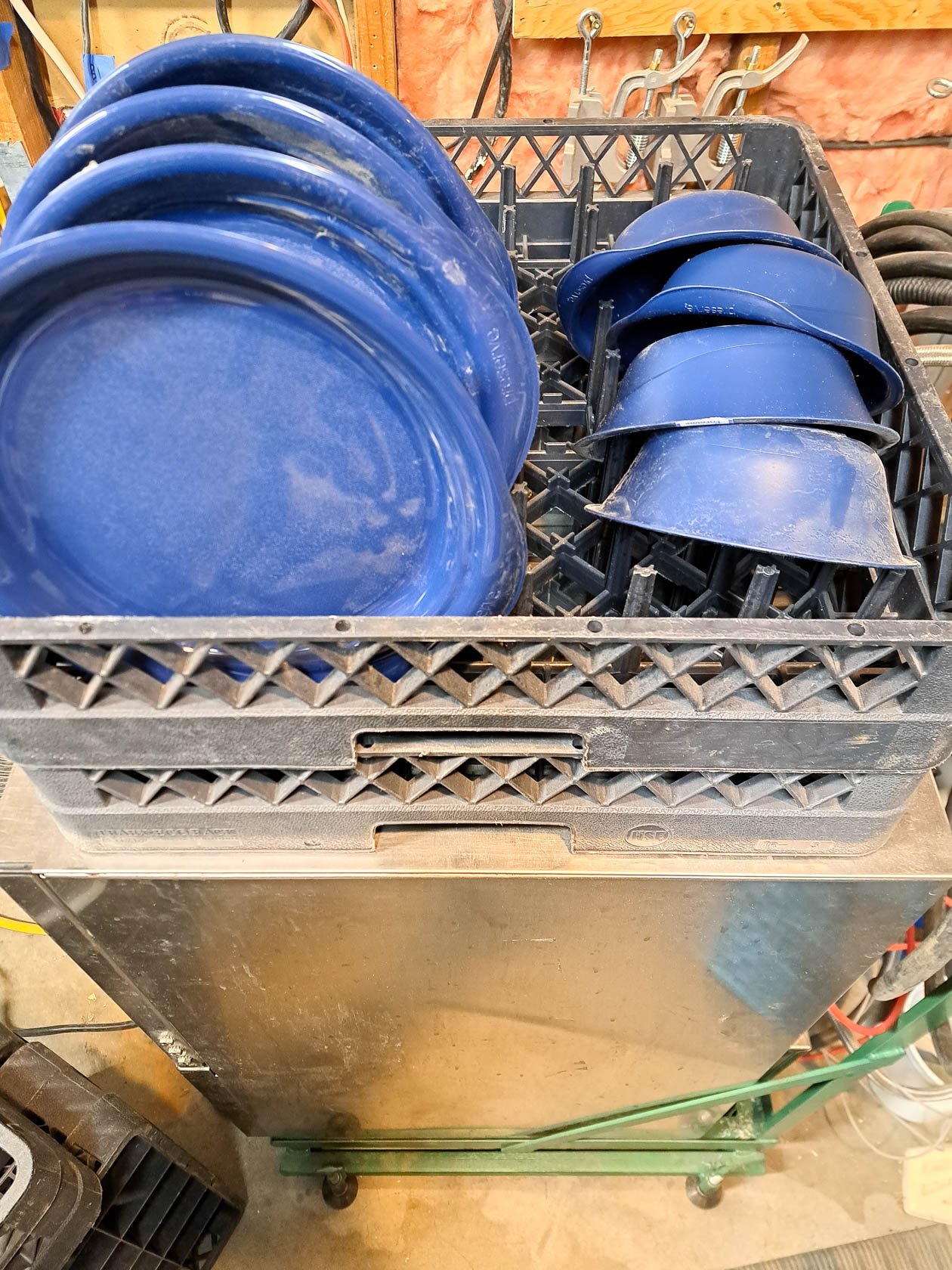
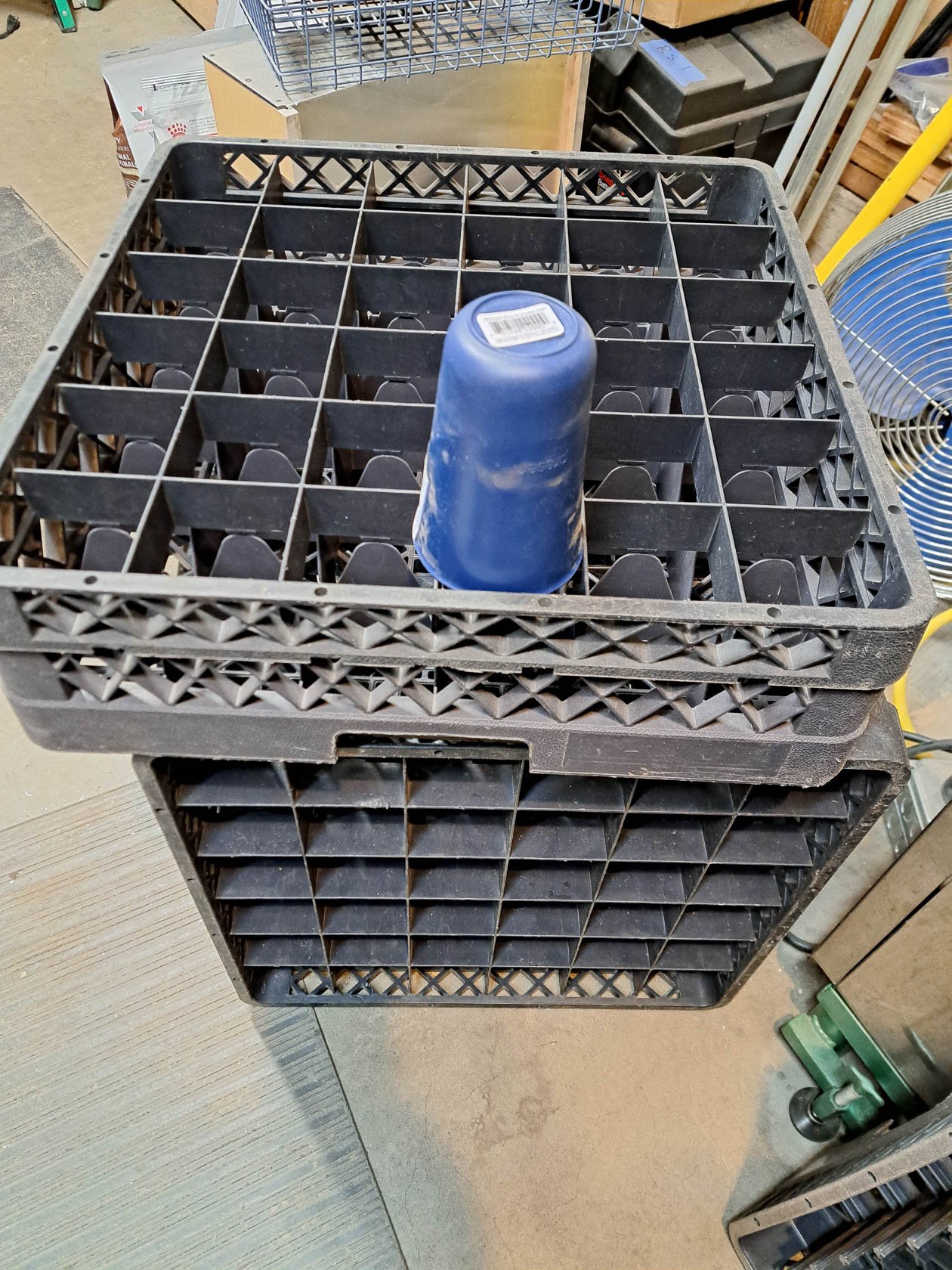
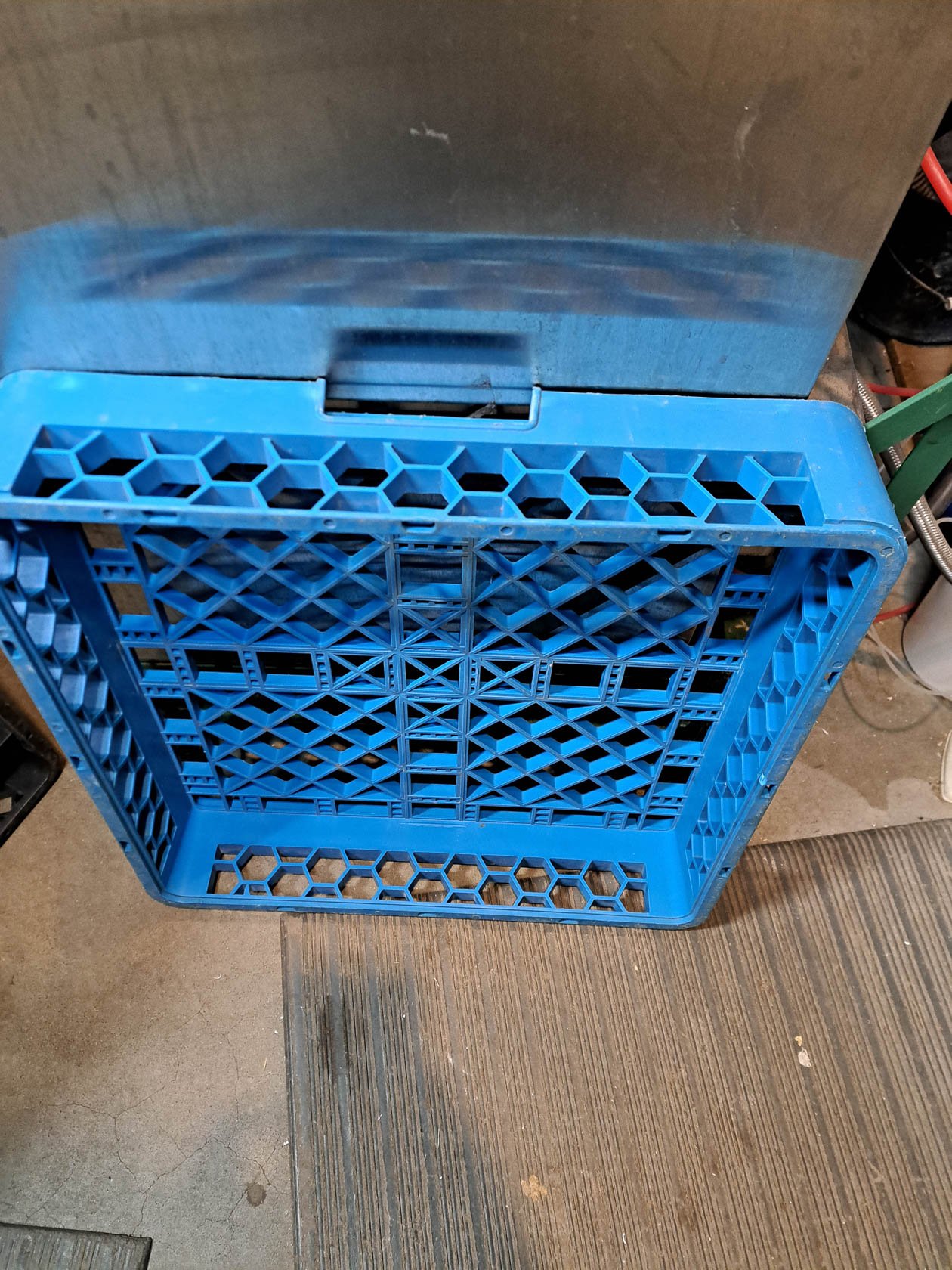
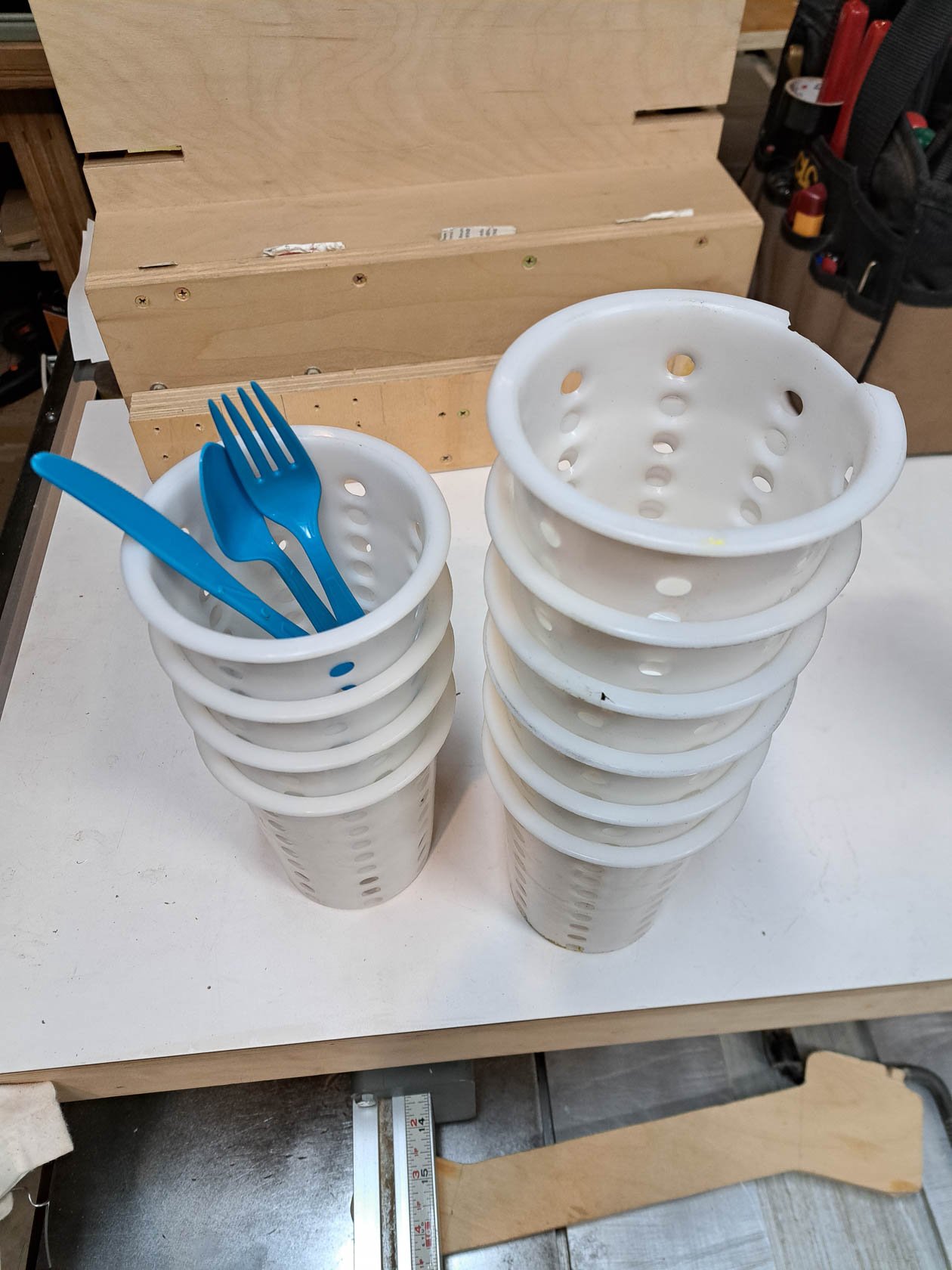
There are 2 of the plate/bowl racks, about 5.75" high - link to similar here
3 divided cup racks with about 3" x 3" sections - too small for the cups we have but there are other versions from the links above and below
1 open flat rack for serving utensils or pots/pans. Openings allow flatware to fall through - link to similar here
Here are some flatware options in full and half rack styles. Open and closed sides and other options here
Racks are 19.5" x 19.5" for this model and available from multiple vendors. Depending on work flow, it would be a good idea to have multiples in each desired rack configuration to allow for loading rack 3 while rack 2 is in the machine and rack 1 is out and ready for unloading. Since the machine can hold multiples of some racks, that could be 6, 9 or 12 of that style in operation.
We will also need organizers/storage for plates, bowls and flatware. Both for transport and for returning to the catering line.
Storing and transporting the racks can be by a flatcart, a frame for a handtruck to move or other. I am guessing there will be quite a few racks and may need to be in several stacks. Open to ideas and can buy or fabricate something that makes it work easily.
Setup for BRNW use
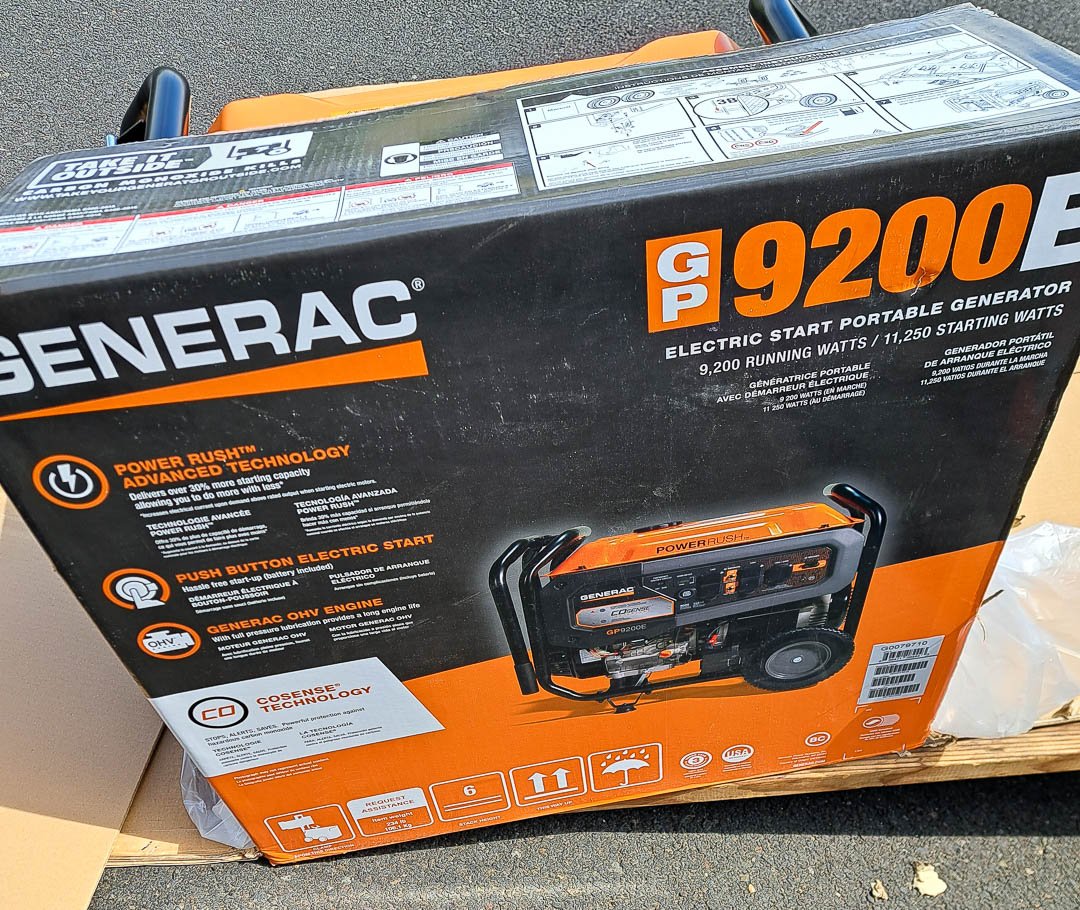
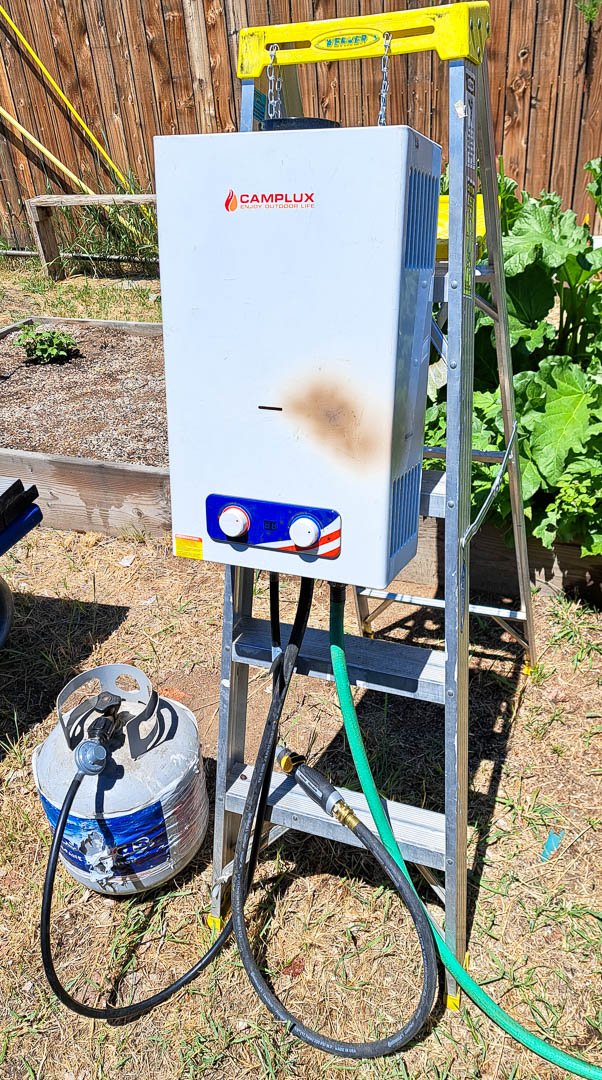
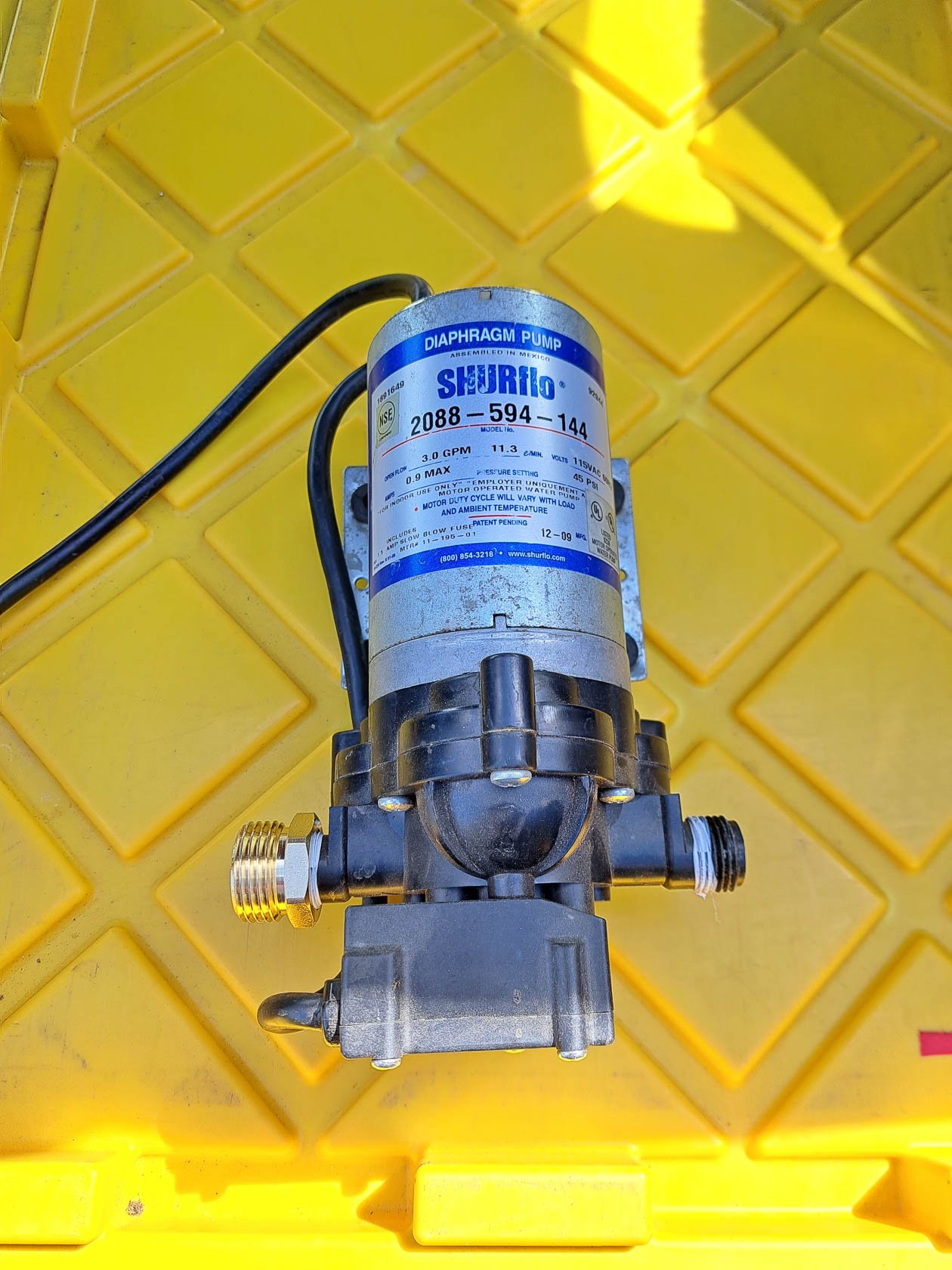
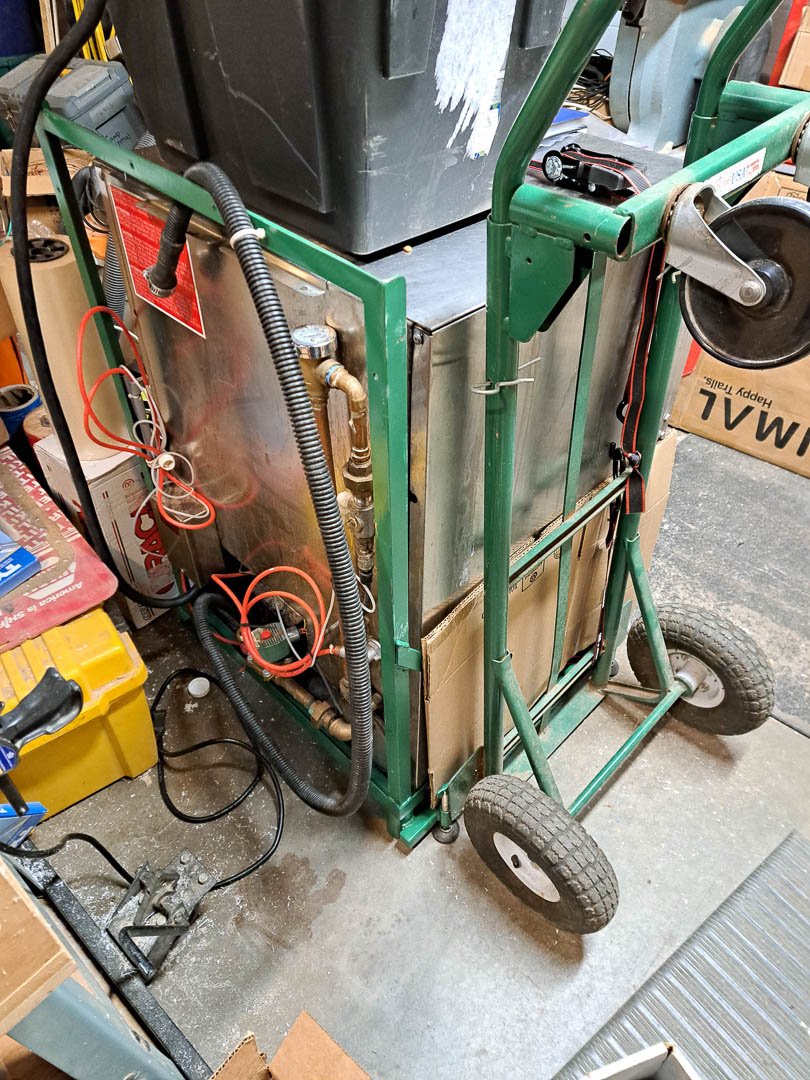
This model also needs a hot water input (listed as 110 degrees) with at least 10 psi of pressure (city water is 80 to 90 psi so this part is easy). A cold water supply on site is easy to find, but hot water is not. We have a tankless water heater that runs off propane. If a cold water connection is available, it can run directly into the water heater. If a connection is not available, a small brewing pump (110v, which the generator can supply also, if there is not a standard receptacle available) can pull from a bucket to feed into the water heater and on to the dishwasher. The water heater can also supply hot water for hand washing dishes in bus tubs and is how it was done up to 2019. And yes, the ladder is how the heater is held up for use. That may change.
Like a residential model, the dishwasher has a discharge pump that can dump to a drain (not common to find), sink (same) or to a bucket. The bucket hold several cycles of discharge and we have lots of buckets.
Depending on site conditions, the setup could be fairly straightforward or involve all the pieces to make it work in the middle of a field.
The dishwasher with frame and ground fault wiring and other "fixed" items is near 300 pounds. It does fit onto a hand truck and go up/down the U-Haul truck ramps but my thought is that it will live in the truck and be turned to face out in use and be strapped to the sidewall for transit. It could be taken out of the truck but suggest lots of care in moving since it can cause damage to people or things and is a pricey item to replace. We got a really good deal on it and would not have it otherwise.
The generator wheel track is wider than the ramps but does go up/down with some extra hands to stabilize it. Setting the generator up on the ground near the truck and the hot water heater outside also should make the setup work wherever it is needed and keeps the generator exhaust and propane exhaust a little bit away from everyone (check the wind...).
All the water connections are planned with garden hoses or washing machine hoses. Both types use hose thread fittings, with washing machine hoses having the same fitting at both ends, different from a garden hose setup. I have also added camlock fittings onto the hose threads to make fast, watertight connections and simplify the setup. There are various adapters on hand and more will be added as needed for different conditions.
While all the pieces have been tested in various configurations, I am still working on the wiring for the dishwasher to incorporate a 220v Ground Fault Circuit Interrupter (safety) and a 220v switch. Since the machine is designed to be hardwired into a building system, we need to take additional measures to make the machine safe for "portable" use.
Connect With Us
Contact

Newsletter
Route History
Click here for a PDF of all our routes since the humble beginning.
Credits
- Burk Webb, Derailleur Films
- Phil Bard, Bard Photography
- K’Lynn Lane, Memory Lane Photography
- Terry Poe, Poe Photography
- Mike Westby
- Jim Moore
- Alice Bonham
- Bill Buckley
- Miranda Morehouse
- Jack Newlevant